


Google’s Project Genie: The AI That Turns Your Words Into Playable Worlds
Google DeepMind has officially opened the doors to a new experimental tool called Project Genie. This groundbreaking platform allows anyone to create and step inside their own interactive 3D worlds simply by typing a description or uploading a photo.
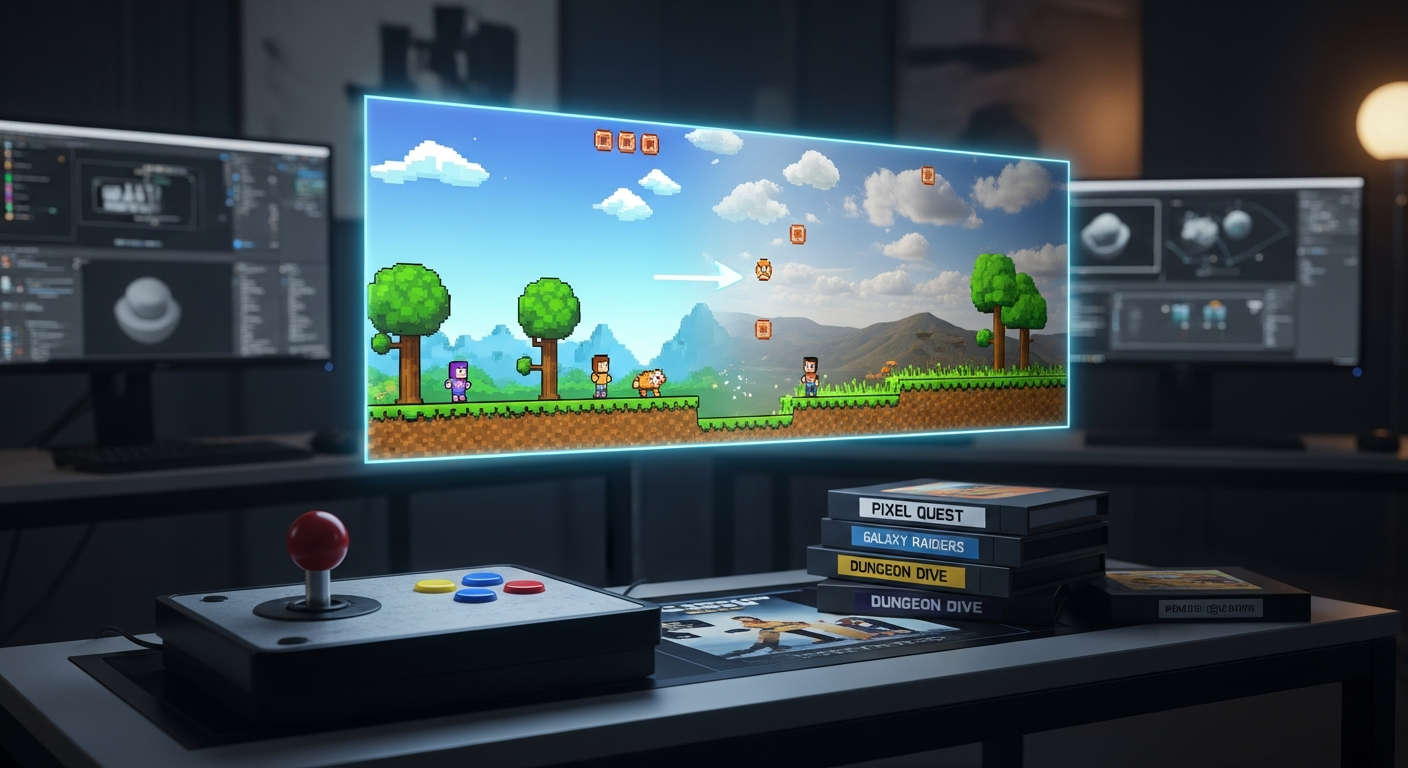
Unlike traditional video games that take years of professional coding and design, Project Genie uses “world models” to build environments on the fly. Whether you want to fly a spaceship over a neon city or walk a cat through a fantasy forest, the AI creates the scene and the physics in real-time as you move.
Key Takeaways
- Instant Creation: Users can generate 3D environments from text prompts or images.
- Interactive Play: You can walk, fly, or drive through these worlds at 24 frames per second.
- Powered by Genie 3: The system uses Google’s latest world model, alongside Gemini and a graphics engine called Nano Banana Pro.
- Limited Access: Currently, the tool is only available to Google AI Ultra subscribers in the U.S. who are 18 or older.
- Experimental Phase: Sessions are currently limited to about 60 seconds of exploration.
How It Works: Sketch, Explore, and Remix
Project Genie is designed to be a creative playground. The process starts with World Sketching, where users describe their setting. You can ask for something specific, like “a Victorian street with magical sparks,” or upload a drawing of a character you created.
Once the world is set, you enter World Exploration. Unlike a simple video, this world is “playable.” If you move your character left, the AI predicts what should be there and renders it instantly. It even remembers where you’ve been; if you turn around and walk back, the scenery stays the same, providing a sense of physical space.
Finally, users can Remix their worlds. If you don’t like a specific mountain or building, you can use additional prompts to change the environment while you are still inside it.
Background: From 2D Games to 3D Reality
Project Genie didn’t appear out of thin air. It is the result of years of research at Google DeepMind.
In 2024, the first version of Genie was introduced as an AI that could create simple 2D platforming games (like Mario) after watching thousands of hours of gameplay videos. By August 2025, Google unveiled Genie 3, which upgraded the tech to handle 3D spaces and better graphics. The current launch of the Project Genie web app marks the first time the general public can interact with these “world models” directly.
Comparison: Project Genie vs. OpenAI’s Sora
While OpenAI’s Sora focuses on creating high-quality, movie-like videos that you just watch, Project Genie is built for interaction. While Sora might look more “realistic,” Genie allows the user to be the pilot, controlling the action and testing the physics of the world.
What Experts Are Saying
Not everyone is cheering for this new frontier. The gaming industry, which has seen thousands of layoffs recently, is watching closely. Some experts worry that AI-generated worlds could replace the jobs of human level designers and artists. According to recent surveys, over 50% of game developers expressed concern about how AI will affect their careers.
On the other hand, some see it as a massive win for education and science. “The ability to simulate nature, from animal behaviors to weather patterns, is a huge step toward Artificial General Intelligence (AGI),” said one researcher at Google DeepMind. There are also potential military uses, with defense analysts suggesting these models could be used for high-speed tactical simulations.
The Challenges Ahead
Despite the “magic” of the tool, Project Genie has some clear hurdles. Because the AI is making things up as it goes, users may notice “glitches” in the physics—like a character clipping through a wall or objects behaving strangely.
There is also the massive issue of copyright. Early users have already used the tool to create worlds that look suspiciously like The Legend of Zelda or Super Mario. Much like the legal battles currently facing AI art and text generators, Google may soon face pressure from gaming giants to prevent users from “remixing” famous intellectual properties.

Frequently Asked Questions (FAQs)
1. What is Google’s Project Genie?
Google’s Project Genie is an experimental AI system that can generate interactive, playable virtual worlds using simple text prompts, allowing users to turn ideas into game-like environments.
2. How does Project Genie turn words into playable worlds?
Project Genie uses advanced AI models trained on visual and interactive data to understand text input and convert it into environments that users can explore and interact with in real time.
3. Is Google’s Project Genie a game engine?
No, Project Genie is not a traditional game engine. It is an AI-powered system designed to generate worlds automatically, reducing the need for manual game design and coding.
4. Who can benefit from Google’s Project Genie?
Game developers, designers, educators, researchers, and creative professionals can benefit from Project Genie by quickly prototyping ideas and exploring AI-generated interactive spaces.
5. Is Google’s Project Genie available to the public?
Currently, Project Genie is a research project and not widely available for public use. Google is still exploring its potential applications and limitations.
6. What makes Project Genie different from other AI tools?
Unlike standard AI image or text generators, Project Genie creates interactive and playable environments, making it more immersive than static AI-generated content.