




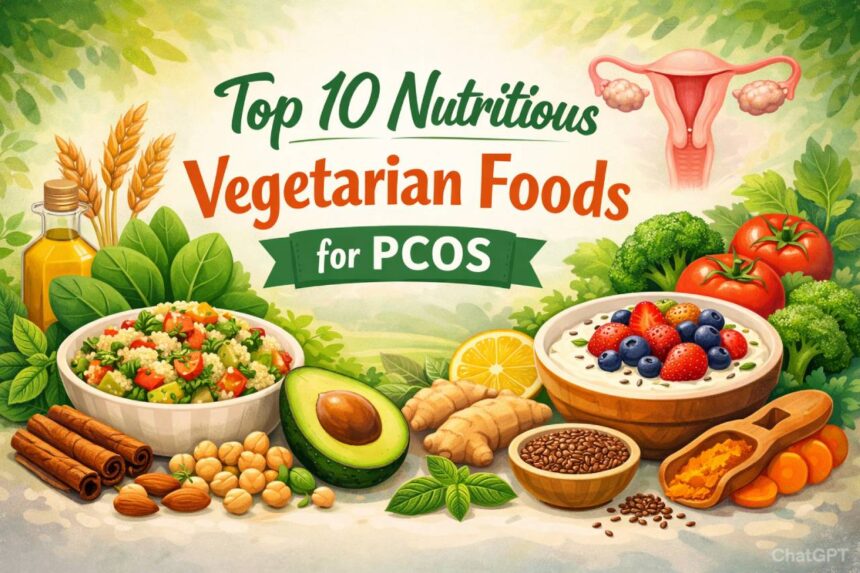
Polycystic Ovary Syndrome (PCOS) is a common hormonal disorder that affects many women and is often linked with insulin resistance, weight gain, irregular periods, and inflammation. While there is no single cure for PCOS, a balanced vegetarian diet plays a powerful role in managing symptoms naturally.
Including the right plant-based foods can help regulate hormones, improve insulin sensitivity, support gut health, and promote overall well-being.
Let’s explore the top 10 nutritious vegetarian foods for PCOS and how they help.
1. Leafy Green Vegetables
Examples: Spinach, kale, methi, lettuce, broccoli
Leafy greens are rich in fiber, iron, magnesium, and antioxidants, which help reduce inflammation and balance hormones. Their low glycemic index (GI) also helps control blood sugar levels, making them ideal for PCOS.
How to include:
Add to salads, smoothies, sabzi, or soups.
2. Whole Grains
Examples: Brown rice, oats, quinoa, millets, barley
Whole grains digest slowly and prevent sudden blood sugar spikes. They improve insulin sensitivity and keep you full for longer, helping with weight management.
How to include:
Choose oats for breakfast, millets for roti, or quinoa for lunch bowls.
3. Legumes & Pulses
Examples: Lentils (dal), chickpeas, rajma, black beans
Legumes are an excellent source of plant protein and fiber, which support hormone regulation and reduce cravings.
How to include:
Dal, chana salad, hummus, or sprouted beans.
4. Nuts & Seeds
Examples: Almonds, walnuts, flaxseeds, chia seeds, pumpkin seeds
These provide healthy fats, omega-3 fatty acids, and zinc, which help lower inflammation and support reproductive health.
How to include:
Soak almonds overnight, sprinkle seeds on salads or smoothies.
5. Low-Glycemic Fruits
Examples: Berries, apples, pears, kiwi, guava
Low-GI fruits are rich in antioxidants and fiber, helping manage insulin levels without increasing blood sugar rapidly.
How to include:
Eat whole fruits instead of juices, preferably with meals.
6. Dairy Alternatives & Low-Fat Dairy
Examples: Unsweetened yogurt, curd, paneer (in moderation)
Probiotics in curd improve gut health, which plays a role in hormone balance. Choose low-fat and unsweetened options.
How to include:
Add curd to meals or enjoy as raita or buttermilk.
7. Healthy Plant Fats
Examples: Avocado, olive oil, groundnut oil
Healthy fats help control inflammation and support hormone production.
How to include:
Use olive oil for salads or add avocado to sandwiches.
8. Vegetables Rich in Antioxidants
Examples: Carrots, bell peppers, tomatoes, beetroot
These vegetables reduce oxidative stress and support metabolic health, which is often affected in PCOS.
How to include:
Raw salads, stir-fries, or roasted vegetables.
9. Fermented Vegetarian Foods
Examples: Idli, dosa, homemade pickles, kanji
Fermented foods support gut bacteria, which may help improve insulin resistance and hormone balance.
How to include:
Prefer homemade, less oily, and less salty versions.
10. Anti-Inflammatory Spices
Examples: Turmeric, cinnamon, ginger, fenugreek (methi)
These spices help reduce inflammation and improve insulin sensitivity naturally.
How to include:
Add to curries, herbal teas, or warm water.
PCOS Diet Tips for Vegetarians
- Combine protein + fiber in every meal
- Avoid refined sugar, white flour, and fried foods
- Eat at regular intervals to manage insulin levels
- Stay hydrated and practice mindful eating
A well-planned vegetarian diet can significantly improve PCOS symptoms when combined with an active lifestyle and proper medical guidance. Focus on whole, natural, and minimally processed foods to nourish your body and restore hormonal balance naturally.