




Generative AI, nowadays, is one of the most talked-about technologies around the world. Writing articles, designing logos, diagnosing diseases, and coding software: this new type of AI is transforming jobs very quickly.
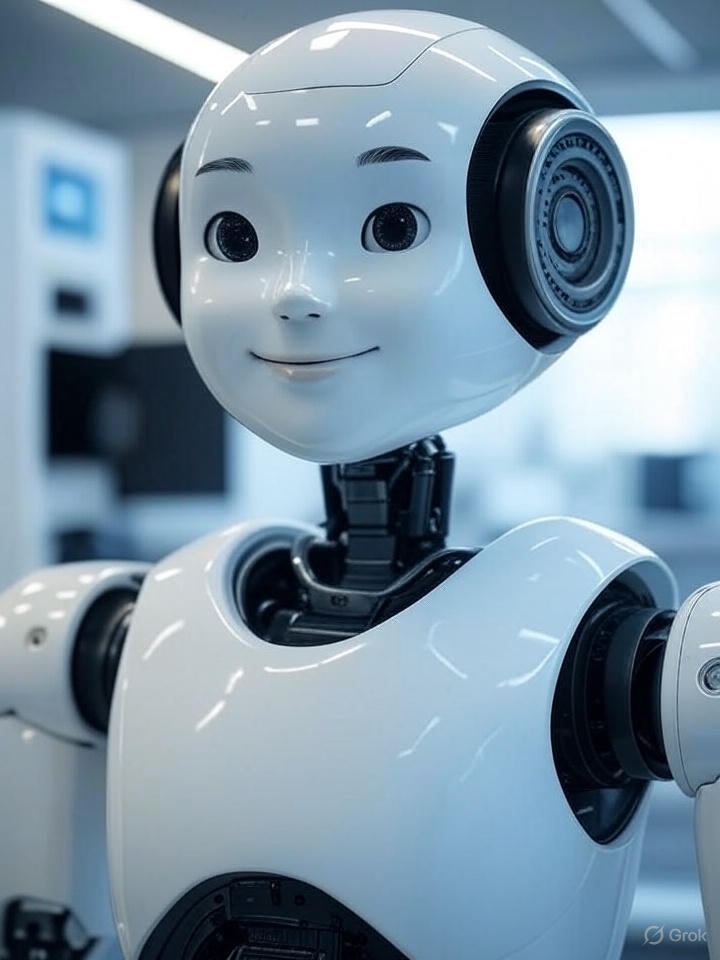
But, so is excitement: there are conversely apprehensions also. Many ask:
Will generative AI take away my job?
Or is it just some helper so one can work smarter, less hard?
Let’s do an analysis of the present impact of generative AI on jobs, why it is known as the next big-tech revolution, and some ways it is being employed in health care and education for good.
What is Generative AI?
Technically, Generative AI consists of AI costituting new content, which may include text, images, music, code, and even videos, depending on the data it has learned. Unlike so-called classical AI systems, which rely on a common set of rules, generative AI focuses on pattern recognition within gargantuan datasets; it then applies those patterns to generate new outputs.
Some of the popular generative AI tools are:
ChatGPT (for text generation)
DALL·E and Midjourney (for image creation)
Google Gemini (multi-modal AI assistant)
GitHub Copilot (for AI code generation)
These tools are already helping millions of professionals save time, enhance creativity, and streamline tasks.
The Next Big Tech Revolution
Once in a few decades, certain technologies arise that change the world forever. There was a period when the internet, smartphones, and social media were mercilessly labeled as breathtakingly new. Now, it is generative AI at the forefront for the next big shift.
What makes generative AI so revolutionary, then?
It is accessible to the common man, not just an exclusive group of techies.
It enables persons and businesses to do more in less time.
It opens up creative and technical possibilities that ever imagined stricken anyone.
It’s penetrating every single industry from healthcare, education to marketing, and manufacturing.
Like any other technology would do, along with the new job types of the new age (such as app developers or digital marketers), generative AI is again redefining job roles and workflows across sectors.
READ MORE: Perplexity AI or ChatGPT: Which AI Assistant is Best to Pick?
Is Generative AI Replacing Jobs?
This is the big question-and it cannot be answered with a mere ‘yes’ or ‘no.
Yes, Some Jobs Are Indeed Being Automated
Generative AI does, in effect, replace some activities that are repetitive or low-skilled. For example:
Data entry is being automated.
AI can write basic content, whether for product descriptions or SEO texts.
Customer support chats are increasingly dealt with by AI chatbots.
There are AI tools to transcribe and translate.
And so, in these spheres, companies prefer to hire an AI for its swiftness, consistency, and lower cost.
But It’s Also Creating and Redefining Jobs
At the same time, new roles are emerging that didn’t exist before:
Prompt engineers who write better queries to get accurate AI responses.
AI trainers and data annotators who help fine-tune models.
Content reviewers and moderators ensure the output is ethical and appropriate.
AI tool developers and integrators who build and customize AI workflows for businesses.
More importantly, AI is enhancing how existing professionals work. Writers, marketers, teachers, doctors, designers, and software developers are using generative AI to amplify their productivity, not replace their skills.
How Generative AI is Redefining Work?
Rather than taking away jobs completely, AI is transforming how work is done. Here’s how:
1. Boosting Productivity
Tasks that used to take hours can now be done in minutes. For instance, marketers can generate campaign ideas, email drafts, and ad copy using AI tools, saving time and energy for strategic thinking.
2. Supporting Creativity
Artists and designers can use AI tools to generate mood boards, design drafts, or concept art. It doesn’t replace human imagination but offers a helpful starting point.
3. Personalizing Experiences
AI can tailor user experiences in real time. In customer service, AI can understand a user’s problem and suggest the right solution instantly.
4. Upskilling Opportunities
As AI takes over routine tasks, professionals can focus on problem-solving, creativity, and leadership. More companies are now investing in training programs to help employees learn AI-related skills.
READ ALSO: 10 Liquid AI Applications in the Real World
Positive Benefits of Generative AI
Despite fears, the benefits of generative AI are hard to ignore:
Faster content creation for blogs, ads, and videos
Better decision-making with real-time data summaries
Cost savings for small businesses
Accessibility tools for disabled users (text-to-speech, language translation)
Creative support for artists, filmmakers, and writers
When used responsibly, generative AI is more of a powerful assistant than a threat.
Generative AI in Healthcare
One of the most exciting areas for generative AI is healthcare.
Key Applications:
AI-generated medical reports save time for doctors and nurses.
Diagnostic support tools analyze patient data faster and more accurately.
Medical image generation and enhancement help in better disease detection.
Virtual health assistants guide patients with information and follow-ups.
Rather than replacing healthcare workers, AI acts as a support system, making care more accurate and accessible.
Generative AI in Education
Education is another field experiencing major transformation with AI.
Benefits for Teachers:
AI helps create lesson plans, quizzes, and personalized exercises.
Teachers can receive insights about student progress and learning gaps.
AI tutors can assist students with homework help and language learning.
Benefits for Students:
Learning becomes personalized, allowing students to move at their own pace.
Language barriers are removed through AI-powered translation and transcription.
Students with disabilities can access text-to-speech and voice input tools.
Generative AI isn’t replacing teachers—it’s helping them deliver smarter and more inclusive education.
So, What’s the Final Answer?
Is generative AI replacing jobs or redefining them?
It’s doing both—but mostly redefining.
As with any major technology shift, some jobs will fade while others will evolve. But rather than fear AI, the better path is to learn how to work alongside it.
In fact, the future belongs to those who understand how to use AI as a partner, not a competitor.
Final Thought: Embrace the Change
Generative AI is here to stay. It’s fast, powerful, and full of potential. Whether you’re a student, teacher, doctor, artist, or small business owner—now is the time to adapt, learn, and grow with AI.
The jobs of tomorrow will look different—but they’ll also be more creative, meaningful, and tech-enabled than ever before.