


Nature’s Giant: Why Gunung Gading National Park is a Must-Visit for Adventure Seekers
Key Takeaways
- Home of the Giant: The park is the best place in Asia to see the Rafflesia tuan-mudae, a flower that can grow up to one meter wide.
- Prime Location: Located in Lundu, it is about a two-hour drive from Kuching, the capital of Sarawak, Malaysia.
- Diverse Trails: Visitors can choose between easy walks on wooden paths or a tough eight-hour hike to the mountain summit.
- Historical Roots: The park was created in 1983 to save the Rafflesia from extinction and opened to the public in 1994.
- Timing is Everything: The Rafflesia blooms for only five to seven days, so visitors should check with park rangers before traveling.
LUNDU, SARAWAK – Deep in the rainforests of Malaysian Borneo, a rare and giant resident is drawing crowds from around the world. Gunung Gading National Park, located near the quiet town of Lundu, has become the premier destination for those hoping to see the Rafflesia—the largest flower on Earth.
While many come for the famous bloom, the park offers a rugged escape into nature, featuring steep mountain peaks and a series of cooling jungle waterfalls.
Seeing the World’s Biggest Flower
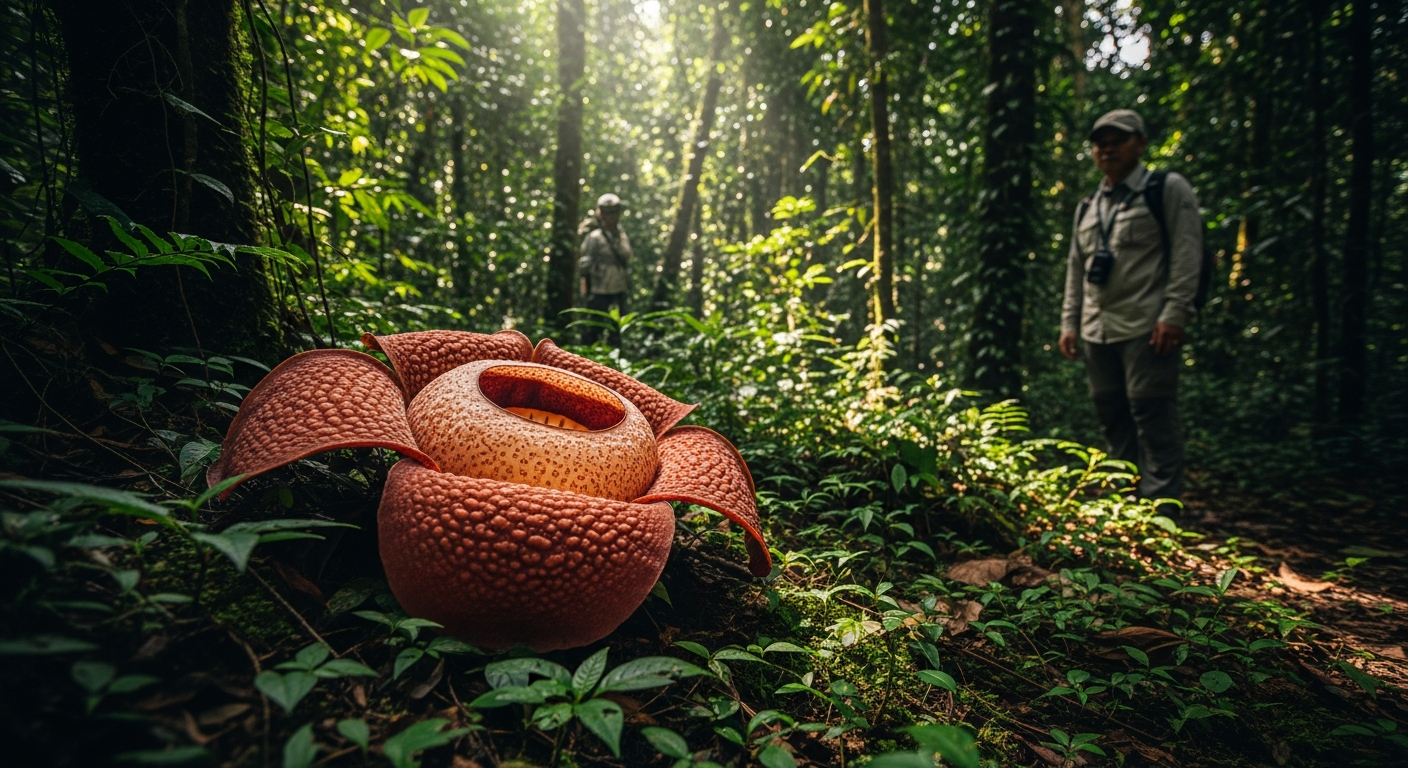
The main attraction at Gunung Gading is the Rafflesia tuan-mudae. This unusual plant has no roots, leaves, or stems. It lives as a parasite inside a specific jungle vine. It takes about nine months for a bud to grow to the size of a cabbage, but when it finally opens, it stays in bloom for only a few days.
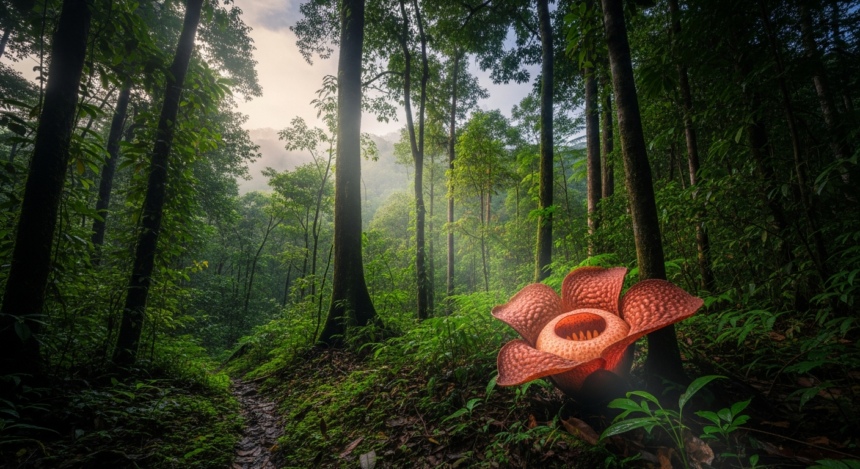
Because the blooming is unpredictable, the park management keeps a close watch on the plants. A short wooden walkway called the "Rafflesia Trail" allows visitors to view the flowers without stepping on the fragile buds hidden on the forest floor. When a flower is in full bloom, its five thick, red petals can stretch nearly three feet across.
Hiking and Waterfalls: Beyond the Bloom
For those who want more than a photo of a flower, the park is a top-tier hiking destination. The terrain is famous for being steep and challenging, with granite slopes covered in thick jungle.
Jungle Waterfalls
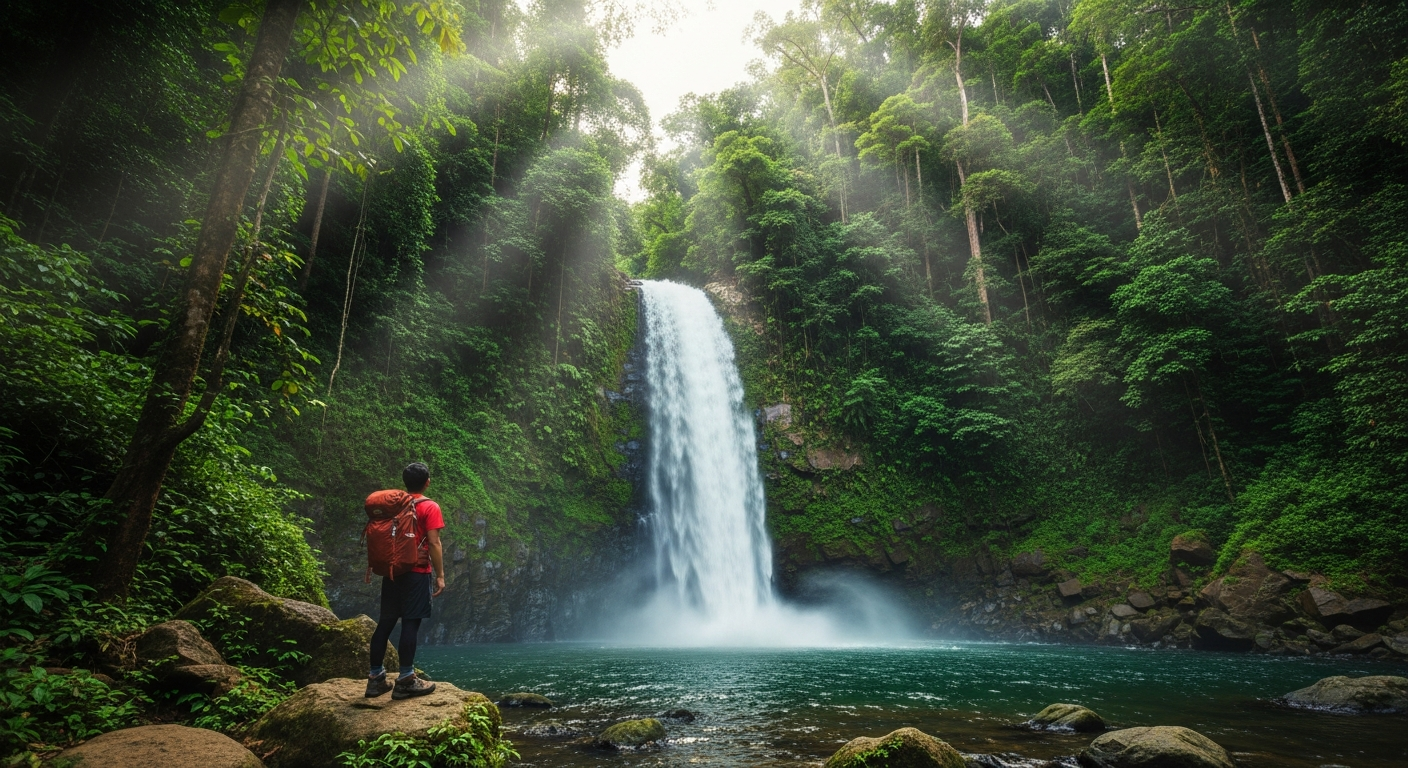
A popular route is the Waterfall Trail. It leads hikers past a series of seven different waterfalls. Waterfall No. 7 is the most spectacular, but it requires a steady climb of about one to two hours from the park headquarters. Many visitors bring swimsuits to cool off in the natural pools along the way.
The Challenge to the Summit
Serious trekkers can take on the Gunung Gading Summit Trail. This is a demanding hike that rises to about 906 meters (nearly 3,000 feet) above sea level. The round trip takes about six to eight hours. At the top, hikers can find remnants of an old British army camp from the 1960s, including a helicopter pad and barbed wire, which serve as a reminder of the area's history during the communist insurgency.
Background: Protecting a Rare Treasure
Gunung Gading was officially protected by the government in 1983. At the time, the Rafflesia was at risk due to logging and habitat loss. For over a decade, the park was used only for research to ensure the plants could survive human visitors.
In 1994, it finally opened to the public. Today, it covers over 4,000 hectares of primary rainforest. It acts as a "living museum" for the Rafflesia and several other rare plants, like the giant Amorphophallus lily.
What Experts Are Saying
Conservationists emphasize that Gunung Gading is a unique success story for eco-tourism. By involving the local community and charging a small entry fee, the park supports the staff who protect the forest daily.
Park rangers often tell visitors that the Rafflesia is as fragile as it is large. They advise travelers to always stay on the marked paths. "One wrong step can kill a bud that took nearly two years to grow," a local guide noted. Experts also suggest that international interest in the flower helps provide the funding needed to keep the park's research programs running.
Planning Your Trip
If you are planning a visit, here are some practical tips:
- Check the Bloom: Call the park headquarters or check the Sarawak Forestry Corporation’s social media before you go to see if any flowers are currently blooming.
- What to Wear: The jungle is hot, humid, and often slippery. Wear sturdy hiking boots and bring plenty of water.
- Entry Fees: The cost is RM10 for Malaysians and RM20 for international visitors.
- Facilities: The park headquarters has an information center, a small cafe, and basic lodging if you wish to stay overnight at the edge of the forest.
Whether the giant flower is in bloom or not, Gunung Gading remains a vital piece of Borneo’s natural heritage, offering a glimpse into a world that has remained unchanged for millions of years.