

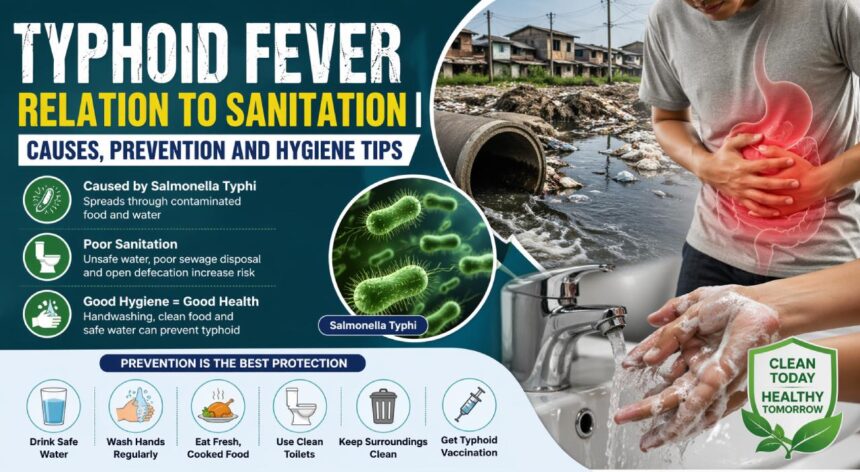
Typhoid Fever is a serious bacterial infection that affects thousands of people every year, especially in areas with poor hygiene and sanitation systems. It is caused by Salmonella Typhi bacteria and spreads mainly through contaminated food and water. This is why typhoid is strongly connected to sanitation and public health.
Maintaining proper cleanliness, access to safe drinking water, and hygienic surroundings can significantly reduce the risk of typhoid fever.
What is Typhoid Fever?
Typhoid fever is an infectious disease that usually causes prolonged fever, weakness, stomach pain, headache, diarrhea, or constipation. In severe cases, it can become life-threatening if not treated on time.
The disease spreads from one person to another through the fecal-oral route, meaning bacteria from infected human waste can contaminate food or water.
How Typhoid Fever Is Related to Sanitation
1. Contaminated Drinking Water
One of the most common causes of typhoid is unsafe water. If sewage mixes with drinking water sources such as wells, tanks, or pipelines, the bacteria can easily spread.
2. Poor Toilet and Sewage Systems
Lack of toilets and proper sewage disposal increases open defecation or leakage of waste into surroundings. This creates a breeding ground for infections like typhoid.
3. Unhygienic Food Handling
Food prepared by infected individuals who do not wash their hands properly can carry typhoid bacteria. Street food prepared in dirty surroundings may also increase risk.
4. Lack of Handwashing Habits
Handwashing with soap after using the toilet and before eating is one of the easiest ways to stop the spread of typhoid.
5. Dirty Living Conditions
Crowded and poorly maintained areas with garbage accumulation and stagnant water often have higher chances of disease outbreaks.
Symptoms of Typhoid Fever
Common symptoms include:
- High fever
- Weakness and fatigue
- Headache
- Stomach pain
- Loss of appetite
- Diarrhea or constipation
- Body aches
If symptoms continue for several days, medical attention is necessary.
How to Prevent Typhoid Fever
Preventing typhoid mainly depends on sanitation and hygiene improvements.
Important Prevention Tips:
- Drink boiled or filtered water
- Wash hands regularly with soap
- Eat freshly cooked food
- Avoid uncovered street food
- Use clean toilets
- Keep surroundings clean
- Get vaccinated if recommended
Importance of Public Sanitation
Government sanitation programs, clean water supply systems, waste management, and public hygiene awareness campaigns play a major role in reducing typhoid cases. Communities with better sanitation usually report fewer infections.
Conclusion
Typhoid fever is closely linked to poor sanitation and unsafe hygiene practices. Since it spreads through contaminated food and water, maintaining clean surroundings, safe water, and proper handwashing habits can help prevent the disease. Improving sanitation is one of the strongest weapons against typhoid fever.
FAQs
1. What is the main cause of typhoid fever?
Typhoid fever is caused by Salmonella Typhi bacteria spread through contaminated food and water.
2. How does poor sanitation cause typhoid?
Poor sanitation allows human waste to contaminate water sources and food, spreading bacteria.
3. Can typhoid be prevented by hygiene?
Yes, handwashing, safe drinking water, and clean food habits greatly reduce typhoid risk.
4. Is typhoid fever dangerous?
Yes, if untreated, typhoid can cause serious complications and may become life-threatening.
5. Which areas have higher typhoid risk?
Places with poor sanitation, unsafe water supply, overcrowding, and low hygiene standards have higher risk.