




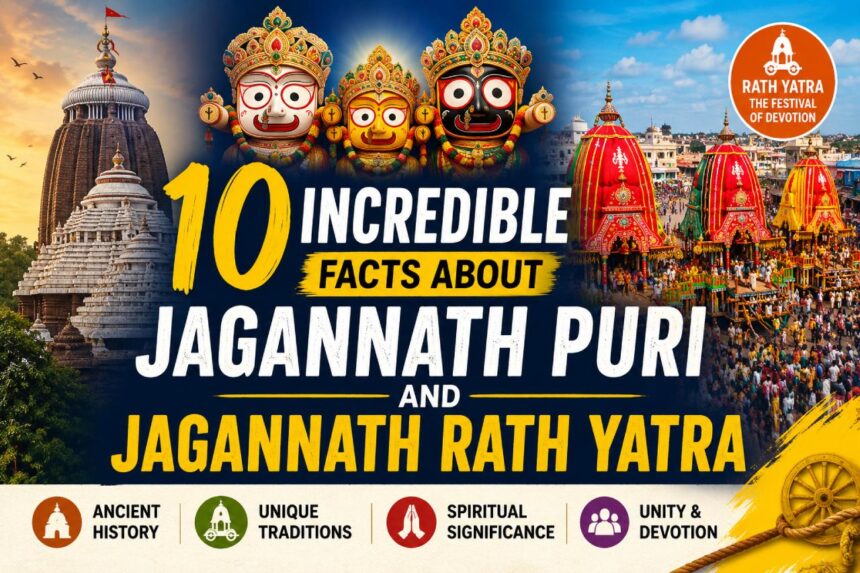
Every year, millions of devotees gather in the holy city of Puri to witness one of the grandest spiritual celebrations in the world — the Jagannath Rath Yatra. The energy, devotion, massive wooden chariots, and centuries-old traditions make this festival truly unforgettable.
- 1. Lord Jagannath Is Worshipped in a Unique Form
- 2. Jagannath Temple Is One of India’s Holiest Pilgrimage Sites
- 3. The Massive Chariots Are Rebuilt Every Year
- 4. Pulling the Chariot Is Considered Highly Sacred
- 5. The Festival Represents God Coming Among the People
- 6. Jagannath Temple Kitchen Is Truly Extraordinary
- 7. The Rath Yatra Has Been Celebrated for Centuries
- 8. The King of Puri Performs a Humble Ritual
- 9. Jagannath Culture Has Spread Across the World
- 10. The Energy of Rath Yatra Is Beyond Words
- FAQs
- 1. Why is Jagannath Rath Yatra celebrated?
- 2. Where is Jagannath Rath Yatra held?
- 3. What are the names of the three Rath Yatra chariots?
- 4. Why do devotees pull the chariots?
- 5. What is special about Jagannath Temple kitchen?
- 6. Can non-Hindus enter Jagannath Temple?
- 7. Why is Jagannath Puri famous worldwide?
But beyond the colorful celebrations lies a deeper story filled with mysteries, history, spiritual beliefs, and unique traditions that continue to fascinate people across the globe.
In this blog, let’s explore 10 incredible facts about Jagannath Puri and Jagannath Rath Yatra that make this sacred festival one of India’s most iconic spiritual events.
What Is Jagannath Rath Yatra?
Jagannath Rath Yatra is a famous Hindu chariot festival celebrated in Puri, Odisha. During this festival, Lord Jagannath, along with his brother Balabhadra and sister Subhadra, comes out of the temple and travels to the Gundicha Temple in beautifully decorated giant chariots.
The word “Rath Yatra” literally means “Chariot Journey.” For devotees, this is not just a festival but a spiritual experience filled with faith, devotion, and divine blessings.
Key Dates & Schedule Jagannath Rath Yatra 2026
- Rath Yatra (Outgoing Journey): Thursday, July 16, 2026
- Bahuda Jatra (Return Car Festival): Friday, July 24, 2026
- Suna Vesa (Deities’ Golden Attire): Following the return journey, marking the conclusion of the even
1. Lord Jagannath Is Worshipped in a Unique Form
Traditional Hindu idols, Lord Jagannath has a very different appearance with large round eyes and unfinished hands. This unique form symbolizes that God is beyond human perfection and exists for everyone equally.
Devotees believe the large eyes represent divine vision watching over the entire universe.
2. Jagannath Temple Is One of India’s Holiest Pilgrimage Sites
The Jagannath Temple in Puri is considered one of the sacred Char Dham pilgrimage destinations in Hinduism. Millions of pilgrims visit the temple every year to seek blessings and experience the spiritual atmosphere of the holy city.
The temple is not just a religious structure; it is a symbol of centuries-old faith, culture, and devotion.
3. The Massive Chariots Are Rebuilt Every Year
One of the most fascinating facts about Rath Yatra is that the giant wooden chariots are newly built every year from scratch.
Special craftsmen begin the construction months before the festival using traditional methods passed down through generations.
The three chariots are:
- Nandighosha – Chariot of Lord Jagannath
- Taladhwaja – Chariot of Balabhadra
- Darpadalan – Chariot of Subhadra
Despite their enormous size, these chariots are completely handmade.
4. Pulling the Chariot Is Considered Highly Sacred
During the Rath Yatra, thousands of devotees pull the giant ropes attached to the chariots. People believe that pulling the chariot brings spiritual blessings, peace, and good fortune.
This act also symbolizes unity because people from all communities come together with devotion and equality.
5. The Festival Represents God Coming Among the People
Most Hindu temples have strict entry rules, but during Rath Yatra, Lord Jagannath himself comes out to meet devotees.
Spiritually, this symbolizes that God belongs to everyone — regardless of caste, status, or background.
This message of inclusiveness is one reason why the festival attracts global attention every year.
6. Jagannath Temple Kitchen Is Truly Extraordinary
The temple kitchen in Puri is considered one of the largest spiritual kitchens in the world.
Thousands of meals are prepared daily using traditional clay pots and wood-fired cooking methods. The food offered to the deity is known as Mahaprasad and is later distributed among devotees.
What makes it special is the belief that the food never goes to waste, no matter how many people visit the temple.
7. The Rath Yatra Has Been Celebrated for Centuries
Jagannath Rath Yatra is not a modern festival. Historians and devotees believe the tradition has been celebrated for hundreds of years.
Even today, many rituals are performed exactly as they were in ancient times, preserving the spiritual and cultural heritage of Odisha.
This deep-rooted tradition is what makes the festival emotionally powerful for devotees.
8. The King of Puri Performs a Humble Ritual
One of the most beautiful moments during Rath Yatra is the ritual called “Chhera Pahanra.”
During this ceremony, the King of Puri sweeps the chariots with a golden broom before the journey begins.
This ritual teaches an important spiritual lesson — no one is above God, and humility is greater than power.
9. Jagannath Culture Has Spread Across the World
Today, Rath Yatra is celebrated not only in India but also in countries like the USA, UK, Canada, Australia, and many others.
Devotees organize colorful processions, cultural programs, devotional singing, and community celebrations inspired by the original festival in Puri.
This global celebration reflects the universal message of devotion and unity associated with Lord Jagannath.
10. The Energy of Rath Yatra Is Beyond Words
People who witness the Rath Yatra often describe it as an emotional and spiritual experience.
The sound of drums, devotional chants, massive crowds, colorful decorations, and giant moving chariots create an atmosphere that feels truly divine.
For many devotees, attending Rath Yatra even once in life becomes a lifelong memory.
Spiritual Importance of Jagannath Rath Yatra
Jagannath Rath Yatra is not only about rituals and celebrations. It carries deep spiritual meanings such as:
- Equality among people
- Devotion and surrender
- God’s connection with humanity
- Unity beyond social divisions
- Spiritual purification
The festival reminds people that faith has the power to bring millions together peacefully.
Why Jagannath Puri Continues to Inspire Millions
Jagannath Puri is more than just a tourist destination. It is a sacred place where spirituality, tradition, culture, and devotion come together beautifully.
Whether someone visits for religious reasons, cultural interest, or spiritual peace, the experience of Puri leaves a lasting impact on the heart.
The timeless traditions of Jagannath Rath Yatra continue to inspire generations and keep India’s spiritual heritage alive.
Jagannath Rath Yatra is one of India’s most powerful spiritual festivals filled with devotion, mystery, and centuries-old traditions. From the giant handmade chariots to the emotional chants of devotees, every moment of the festival reflects faith and unity.
If you ever get the chance to witness the Rath Yatra in Puri, it can become an unforgettable spiritual experience.
Jai Jagannath!
FAQs
1. Why is Jagannath Rath Yatra celebrated?
Jagannath Rath Yatra is celebrated to mark the annual journey of Lord Jagannath, Balabhadra, and Subhadra from the Jagannath Temple to the Gundicha Temple in Puri.
2. Where is Jagannath Rath Yatra held?
The main Rath Yatra takes place in Puri, Odisha, India, and attracts millions of devotees every year.
3. What are the names of the three Rath Yatra chariots?
The three famous chariots are:
- Nandighosha
- Taladhwaja
- Darpadalan
4. Why do devotees pull the chariots?
Devotees believe that pulling the chariot ropes brings blessings, spiritual purification, and good fortune.
5. What is special about Jagannath Temple kitchen?
The temple kitchen is famous for preparing Mahaprasad for thousands of devotees daily using traditional clay pots and ancient cooking methods.
6. Can non-Hindus enter Jagannath Temple?
Non-Hindus are generally not allowed inside the main temple premises, but they can witness the Rath Yatra and enjoy views of the temple from nearby locations.
7. Why is Jagannath Puri famous worldwide?
Jagannath Puri is famous for its spiritual importance, ancient traditions, unique temple culture, and the globally celebrated Rath Yatra festival.