





Polycystic Ovarian Disease (PCOD) is common in women, and for many, making genuine changes to achieve weight loss can be the most difficult thing to do. However, following a reasonable PCOD diet chart can help balance hormones, improve metabolism, and manage weight effectively.
- 10 Best Dishes in PCOD Diet Chart for Weight Loss
- 1. Quinoa Vegetable Salad
- 2. Grilled Paneer with Veggies
- 3. Moong Dal Chilla
- 4. Oats and Chia Seed Porridge
- 5. Grilled Chicken with Steamed Veggies
- 6. Vegetable Upma (Rava/Sooji Upma)
- 7. Sprouts Salad
- 8. Bajra Roti with Palak Sabzi
- 9. Brown Rice with Rajma (Kidney Beans)
- 10. Greek Yogurt with Nuts & Berries
- Tips to Make Your PCOD Diet Chart for Weight Loss
- FAQs
Among the most important components of a healthy PCOD lifestyle is food selection. That is, foods that are nutritious, low in refined carbs, high in protein, and packed with fiber. If you are struggling with PCOD and weight management, this blog summarizes the 10 best dishes that can be included in a PCOD diet chart that will promote weight loss while also creating a tasty meal for individuals with PCOD.

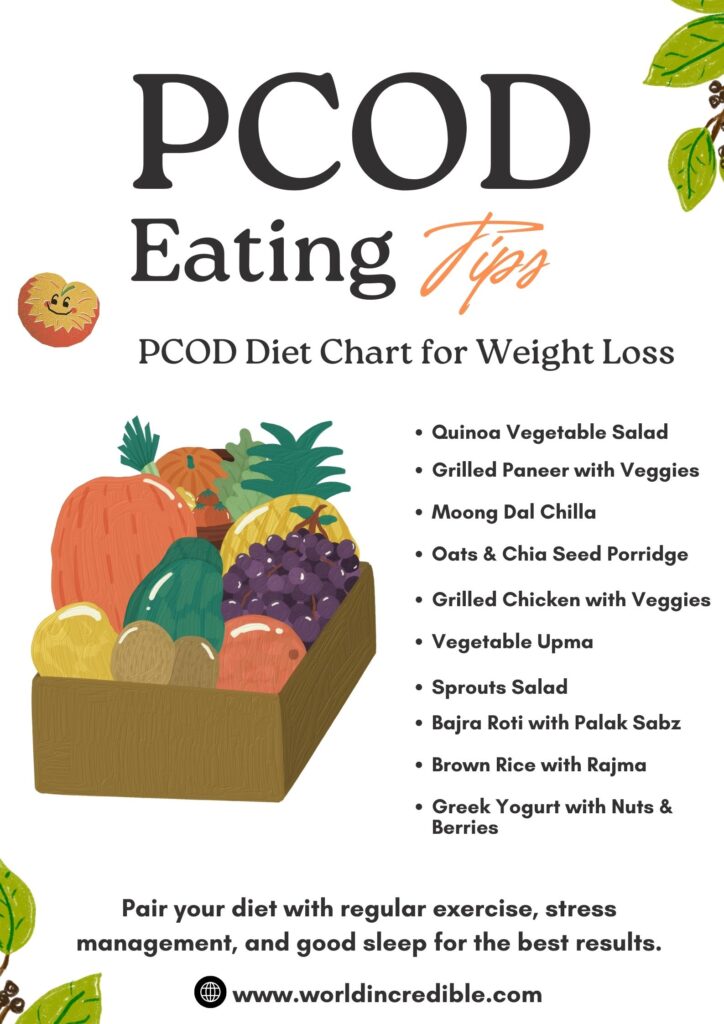
10 Best Dishes in PCOD Diet Chart for Weight Loss
| Dish | Description | Benefits for PCOD & Weight Loss |
|---|---|---|
| Quinoa Vegetable Salad | Quinoa mixed with cucumber, tomato, spinach, and olive oil | High protein aids fat loss, keeps you full longer |
| Grilled Paneer with Veggies | Paneer grilled with bell peppers, zucchini, and broccoli | Boosts protein intake, stabilizes blood sugar, builds muscle |
| Moong Dal Chilla | Savory pancakes made with green gram (moong dal) | Gluten-free, protein-rich, reduces cravings |
| Oats & Chia Seed Porridge | Oats cooked with chia seeds and low-fat milk/almond milk | Low GI, improves digestion, provides omega-3s |
| Grilled Chicken with Veggies | Lean chicken paired with steamed broccoli, carrots, spinach | Plant protein, antioxidants, and easy to digest |
| Vegetable Upma | Sooji (rava) upma cooked with carrots, beans, and peas | Light meal, rich in fiber and vitamins, stable energy release |
| Sprouts Salad | Moong sprouts mixed with onion, tomato, and lemon juice | Probiotics for gut health, antioxidants, ealthy fats |
| Bajra Roti with Palak Sabzi | Gluten-free bajra roti served with spinach curry | High fiber, rich in iron, supports hormonal balance |
| Brown Rice with Rajma | Brown rice paired with kidney beans | Complex carbs + protein keep hunger under control |
| Greek Yogurt with Nuts & Berries | Greek yogurt topped with almonds, walnuts, and fresh berries | Probiotics for gut health, antioxidants, and healthy fats |
1. Quinoa Vegetable Salad
A great salad, packed with fiber, made with quinoa, cucumber, tomato, spinach, and olive oil. It is high in protein, low in GI, and gives a good bulk effect, keeping you feeling fuller for longer, managing insulin resistance.
2. Grilled Paneer with Veggies
Paneer (cottage cheese) is a great source of protein for vegetarian diets.
Grilled along with bell peppers, zucchini, and broccoli.
Helps to control sugar spikes while supporting muscle recovery after workouts.
Read Also, Do’s and Don’ts in PCOD Diet Charts for Better Health
3. Moong Dal Chilla
An Indian dish made with soaked moong dal (green gram) and spices is a good, healthy option. This is a gluten-free, protein-rich breakfast option. Good to add to your PCOD diet chart as it will keep cravings at bay and support fat-burning.
4. Oats and Chia Seed Porridge
A nutritious start to your day for PCOD weight loss; oats help with the management of cholesterol and keep blood sugar levels stable. Chia seeds add omega-3s and fiber, helping with digestion!
5. Grilled Chicken with Steamed Veggies
If you are a non-vegetarian, grilled chicken is an excellent lean protein source. Grilled chicken will help you gain lean muscle and burn fat. Steamed broccoli, carrots, or spinach are excellent accompaniments to this meal.
6. Vegetable Upma (Rava/Sooji Upma)
This is a light South Indian food that is satiating. You can add carrots, beans, and peas to this dish for fiber and vitamins. Upma is a great meal that will help regulate energy levels without causing a spike in blood sugar levels.
7. Sprouts Salad
Made from moong sprouts, tomatoes, onions, and lemon. This salad is loaded with plant protein that is easy to digest. Sprouts and legumes are excellent for weight loss, and they supply high antioxidant levels.
8. Bajra Roti with Palak Sabzi
This is a nutritious Indian meal that is gluten-free and PCOD-friendly. Bajra (pearl millet) is high in fibre and iron, and palak (spinach) adds calcium and many vitamins!
Read Also, 20 Best PCOD Diet Charts for Weight Loss
9. Brown Rice with Rajma (Kidney Beans)
A standard meal combining complex carbohydrates with plant protein. Brown rice has a lower glycemic index than white rice. Rajma is a great source of protein and fibre that will help satisfy hunger.
10. Greek Yogurt with Nuts & Berries
A refreshing snack or light dessert.
Nuts and berries add antioxidants and healthy fats.
Greek yogurt provides probiotics for gut health.
Also Read: Nourishing Your Body | A Guide to Healthy Lunch for Weight Loss
Tips to Make Your PCOD Diet Chart for Weight Loss
- Avoid refined carbs and sugary foods.
- Include high-protein meals to stabilize hormones.
- Add healthy fats (nuts, seeds, olive oil).
- Stay hydrated with herbal teas and water.
- Follow small, frequent meals to manage metabolism.
Dealing with Polycystic Ovarian Disease (PCOD) doesn’t have to be about bland food. You can have your cake and eat it too while you include the following 10 best foods in your PCOD diet chart. Remember, a diet of rich sources of protein, fiber, whole grains, and fresh veggies is the secret to balancing hormones, feelings of energy, and enjoying sustainable health.
Keep in mind consistency is better than perfection. The best results will come when you combine a healthy diet with exercise, better stress management, and regular quality sleep.
FAQs
1. What foods should be avoided in a PCOD diet?
Women with PCOD should avoid refined carbs (white bread, pasta, bakery items), sugary drinks, fried foods, and processed snacks. These foods spike blood sugar, worsen insulin resistance, and lead to weight gain.
2. Is dairy good or bad for PCOD?
Low-fat or lactose-free dairy can be consumed in moderation, but full-fat milk, cheese, and ice cream may worsen hormonal imbalance for some women. Many prefer Greek yogurt or plant-based milk (almond/soy milk) as alternatives.
3. Can PCOD be managed with diet alone?
Diet plays a major role in managing PCOD, but it works best when combined with regular exercise, stress management, and good sleep. A healthy lifestyle along with diet is essential for long-term results.
4. How often should I eat when following a PCOD diet chart?
Instead of 2–3 heavy meals, it is recommended to eat small, frequent meals (every 3–4 hours). This helps stabilize blood sugar, reduce cravings, and improve metabolism.
5. Which fruits are best for PCOD Diet For weight loss?
Low-GI fruits like berries, apples, pears, oranges, and kiwi are ideal. Avoid high-sugar fruits like mangoes, grapes, and bananas in excess as they can spike insulin levels.